 bluename
 How to Care for Aglaonema in Dark Rooms: A Plant Lover’s Real-World Guide
I’ve always loved filling my home with greenery, but not every corner gets the perfect bright, indirect light we read about in plant care guides. My hallway, home office, and a cozy reading nook are what I’d call “dark rooms”—spaces with minimal natural light, often relying on ambient room lighting for most of the day. I was determined to find a plant that could not only survive but truly thrive in these challenging conditions. After plenty of research and trial and error, I found my champion: the Aglaonema, or Chinese Evergreen. This journey taught me that success with how to care for Aglaonema in dark rooms isn’t about luck; it’s about understanding and adapting to its specific needs in low-light environments.
My quest began after I killed a few too many light-loving plants in these spots. The core problem was clear: how do you provide enough energy for growth when sunlight is scarce? I learned that for Aglaonemas, the solution lies in a careful balance of watering, strategic placement, and managing expectations. I decided to document a complete, hands-on experiment with three different Aglaonema varieties in my darkest rooms, observing them closely for over two weeks to see what really works.
Understanding Aglaonema’s Low-Light Tolerance
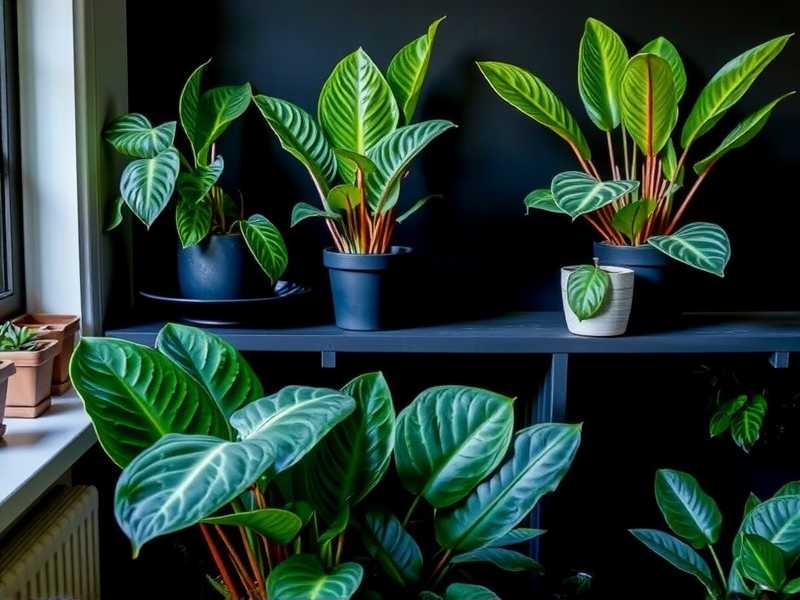
First, let’s talk about why Aglaonemas are such fantastic candidates for dim spaces. Unlike many tropical plants, Aglaonemas have evolved under the canopy of dense rainforests, receiving only dappled sunlight. This makes them inherently adaptable to lower light conditions. However, “low light” doesn’t mean “no light.” It’s crucial to distinguish between a north-facing room with some ambient light and a windowless bathroom with the door closed. The former can work; the latter is a recipe for decline.
According to the Royal Horticultural Society (RHS), Aglaonemas are classified as excellent plants for low-light interiors. They note that while growth will be slower, the plant’s striking variegated foliage can still maintain its color reasonably well, especially in darker green varieties. The American Horticultural Society (AHS) supports this, emphasizing that over-lighting, particularly direct sun, is more often a threat to Aglaonemas than insufficient light, as it can scorch their beautiful leaves.
My Two-Week Aglaonema Care Experiment
I selected three Aglaonema cultivars: a classic ‘Silver Bay’ (known for its silvery center), a darker ‘Maria’ (with deep green leaves), and a ‘Red Siam’ (for a pop of color). I placed each in a different low-light zone in my home.
Week 1: The Setup and Initial Adjustments
My primary focus was on watering. This is the most common pitfall. In bright light, soil dries quickly. In dark rooms, evaporation slows to a crawl. I used my finger to test the soil moisture, aiming to let the top 1.5 to 2 inches dry out completely before even thinking about watering. For my ‘Maria’ in the deepest corner, the soil was still moist an entire week after a thorough initial watering.
- The First “Crisis” and Solution: My ‘Silver Bay,’ placed in what I thought was a decent spot, developed a single yellow leaf after just four days. I panicked! Upon investigation, I realized it was in a slight draft from an air vent. I moved it a few feet away, removed the yellow leaf, and held off on water. The problem stabilized. The lesson? In low light, environmental stressors like drafts or sudden temperature changes have a magnified effect. The plant’s energy reserves are already allocated conservatively; it has little to spare for stress recovery.
Week 2: Observing Growth and Refining Care
By the second week, a routine was established. No plant showed dramatic new growth, and that was okay. The goal was health, not speed. The ‘Maria’ and ‘Silver Bay’ looked stable and perky. The ‘Red Siam,’ however, taught me another valuable lesson about caring for Chinese Evergreens in low light.
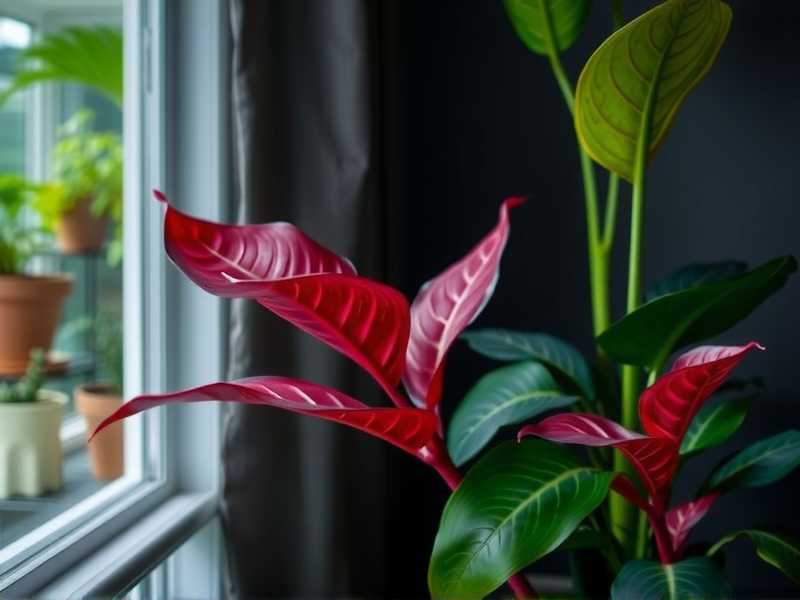
- The Variegation Challenge: I noticed the pink and red edges on the ‘Red Siam’ seemed slightly less vibrant. This is a known trade-off. Highly variegated plants have less chlorophyll, the pigment needed for photosynthesis. In low light, they may produce new leaves with more green and less variegation to capture more energy. It wasn’t a sign of failure, but an adaptation. To give it a slight boost without moving it, I started rotating it a quarter turn every time I checked the soil to ensure all sides received equal access to the ambient light.
The Essential Care Routine for Dark Rooms
Based on my two-week observation and ongoing care, here is the actionable, step-by-step guide I now follow.
1. The Right Watering Rhythm is Everything Forget the calendar. Your watering schedule is dictated by the soil and the room’s conditions. I now use a moisture meter for precision. In my dark rooms, watering frequency dropped to roughly once every 2.5 to 3 weeks. The key is deep, thorough watering when you do it, allowing excess to drain completely. Never let the plant sit in a saucer of water—this is the fastest way to induce root rot in a slow-drying pot.
2. Strategic Placement Within the Dark Room Even within a dark room, there are better spots. I placed my plants as close to the doorway of the room as possible, where reflected light from a brighter hallway could reach them. I also avoided corners directly opposite televisions or computer monitors, as the heat and light cycles can be disruptive. A position near a light-colored wall can help reflect any available ambient light.
3. Fertilizing: Less is Infinitely More In low-light conditions, a plant’s growth and nutrient requirements plummet. Fertilizing at a standard rate can lead to toxic salt buildup in the soil, damaging the roots. I follow the advice of experts from the AHS, who recommend diluting a balanced, water-soluble fertilizer to half-strength and applying it only during the active growing season (spring and summer), and no more than once every 6-8 weeks for a dark-room plant. In fall and winter, I stop entirely.
4. Soil and Pot Selection for Success A well-draining, airy potting mix is non-negotiable. I use a standard indoor potting mix amended with extra perlite and orchid bark to increase aeration. This helps the roots breathe and the soil dry more evenly, countering the dampness of a dark room. Choose a pot with excellent drainage holes, and consider a porous terracotta pot, which can help wick away minor excess moisture from the soil.
5. Managing Expectations and Long-Term Health Accept that your Aglaonema will grow very slowly. This is normal and healthy for its environment. Your job shifts from encouraging rapid growth to maintaining pristine health. This means regularly wiping the leaves with a damp cloth to remove dust, which can further block precious light. Be vigilant for pests like mealybugs, which can sometimes target stressed plants. A quick wipe with insecticidal soap or neem oil solution takes care of them.
Common Questions I Get Asked (And What I Learned)
Will my Aglaonema eventually die in a dark room? Not if you choose the right variety and care for it appropriately. Darker green cultivars like ‘Maria’ or ‘Emerald Beauty’ are the most resilient. With correct watering and placement, they can live for years, providing stable, beautiful foliage. They become low-maintenance fixtures rather than fast-growing showpieces.
Can I use a grow light to help it? Absolutely, and this is a fantastic solution if you want to see more growth or maintain vivid variegation. After my experiment, I added a small, low-wattage LED grow light bulb to a desk lamp near my ‘Red Siam.’ I run it for just 4-6 hours a day. The difference in leaf color and firmness over the following month was remarkable. It’s a simple way to bridge the gap between a dark room and a plant’s needs.
What are the absolute signs my Aglaonema isn’t getting enough light? While slow growth is normal, certain signs indicate it’s time to find a brighter spot or add a supplemental light. These include: new leaves emerging significantly smaller than older ones, an overall leggy or stretched appearance as the plant reaches for light, a pronounced loss of variegation (leaves turning mostly solid green), or a general, pervasive yellowing of multiple leaves combined with damp soil, signaling potential rot from insufficient light to use the water provided.
Caring for Aglaonemas in dark rooms has been one of my most rewarding plant experiences. It taught me patience, observation, and the importance of working with a plant’s natural adaptations rather than against them. The key takeaways are simple: water with extreme caution, choose your cultivar and spot wisely, and embrace the slow, steady beauty of a plant that’s perfectly adapted to the quiet, shadowy corners of your home. By following these hands-tested steps, you can confidently turn your dimmest space into a thriving green oasis.





