 bluename
 How to Train Aglaonema Growth Direction for a Fuller, More Balanced Plant
For years, my Aglaonema, or Chinese Evergreen, was a source of quiet frustration. It was alive, yes, and even putting out new leaves, but its growth was… chaotic. A few stems stretched desperately towards my one north-facing window, leaving the other side of the pot looking sparse and bare. The plant wasn’t the lush, symmetrical centerpiece I envisioned. I realized I wasn’t just a passive observer; I needed to become a guide. This is when I embarked on a mission to learn how to train Aglaonema growth direction. It wasn’t about forcing it, but about understanding its needs and gently encouraging it to grow fuller and more balanced. If you’ve ever looked at your lopsided Aglaonema and wondered how to make it bushier, you’re in the right place. Over the next sections, I’ll share my hands-on, two-week experiment that transformed my plant’s posture using simple, non-invasive techniques.
Understanding Why Aglaonema Grows Lopsided
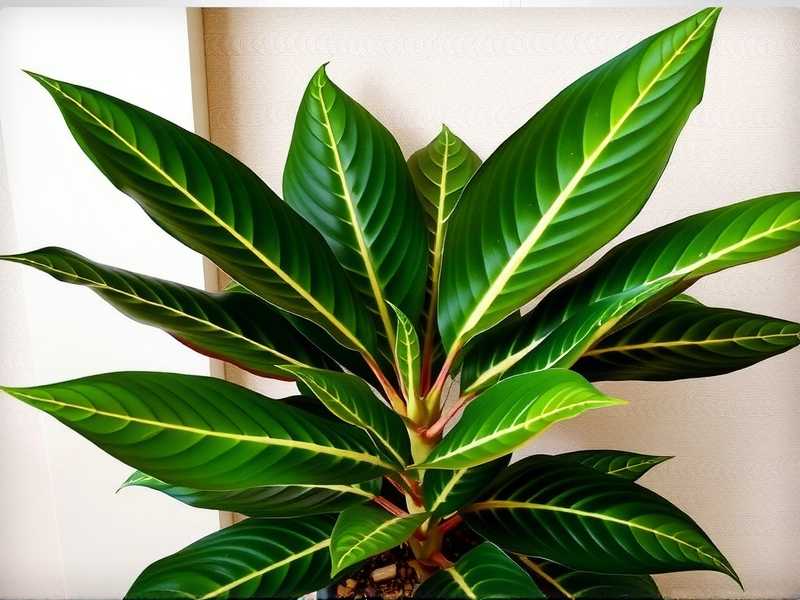
Before you can guide growth, you need to understand what drives it. Aglaonemas, like most plants, exhibit a behavior called phototropism—they grow towards light. In a home environment, light is rarely perfectly even, leading to that familiar, one-sided stretch. The American Horticultural Society (AHS) notes that “interior plants will always orient their foliage to maximize light absorption,” which is the root cause of uneven growth. Furthermore, Aglaonemas naturally grow from a central crown or multiple basal shoots. Without intervention, these shoots can grow at different rates, sometimes creating a top-heavy or uneven appearance. The goal of training isn’t to fight these instincts but to work with them to create a more aesthetically pleasing result.
My Toolkit for Guiding Growth
I gathered a few simple tools, most of which I already had at home:
- Soft Plant Ties or Velcro Straps: Essential for gentle support. Never use wire or string that can cut into stems.
- Small, Sturdy Stakes (Bamboo or Moss Poles): For providing vertical support and a structure to tie growth to.
- Rotating Turntable (optional but highly recommended): This became my secret weapon for even light exposure.
- Sharp, Clean Pruning Shears: For strategic trimming.
- A Light Meter App (on my phone): To quantitatively measure light levels around my plant’s location.
The Two-Week Training Protocol: A Step-by-Step Diary
I committed to a daily routine for 14 days, knowing consistency was key to seeing real changes in my Aglaonema’s growth direction.
Week 1: Assessment and Initial Intervention
Day 1-2: The Baseline Evaluation. I started by giving my Aglaonema a thorough inspection. I noted which stems were leaning, how dense the foliage was on each side, and identified the primary light source. Using my light meter app, I confirmed a significant difference: the side facing the window read 150 foot-candles (FC), while the back side was a mere 50 FC. This stark imbalance explained everything. My first action was to gently clean every leaf with a damp cloth. According to research highlighted by the Royal Horticultural Society (RHS), dust can block up to 50% of the light a leaf can absorb. Clean leaves are step one for efficient growth.
Day 3-5: Strategic Rotation and the First Tie. This is where the turntable came in. I placed the pot on it and began a strict rotation schedule: a quarter turn (90 degrees) every single morning after watering. This simple act ensured all sides of the plant received equal face-time with the window over a four-day cycle. For the most severely leaning stem, I introduced a bamboo stake. I inserted it into the potting mix opposite the lean, careful not to damage roots. Using a soft Velcro strap, I loosely tied the stem to the stake, pulling it just upright enough to correct the angle without straining it. The key here was gentle persuasion, not force.
Day 6-7: Addressing Sparse Areas with Pruning. I identified one long, leggy stem that had few leaves along its lower half. To encourage bushier growth from the base—a core technique for a fuller Aglaonema—I made a strategic cut. I found a node (a small bump on the stem where leaves and buds emerge) about one-third of the way down the stem and made a clean, angled cut just above it. This “pinching” or tipping redirects the plant’s energy from vertical growth to activating dormant buds lower down, promoting lateral branching. I felt a pang of nervousness making that first cut, but I trusted the process.
Week 2: Observation, Adjustment, and Encouraging New Growth
Day 8-10: Monitoring and Fine-Tuning. The daily rotations continued. I was vigilant for signs of stress, but the plant seemed to tolerate the adjustments well. I noticed the tied stem was holding its new position without the strap digging in. The pruned stem showed no signs of die-back at the cut site, a good indicator. Most importantly, I observed that the newer, smaller leaves on the plant’s shaded side were beginning to orient themselves slightly more outward, as if reaching for the light they were now regularly receiving. This was the first visible sign that training the Aglaonema’s growth direction was working.
Day 11-14: The Payoff and Long-Term Plan. By the end of the second week, the change was undeniable. The plant’s silhouette was noticeably more balanced. The previously stretched side had stopped its desperate lean, and the overall form was denser and more symmetrical. The single most exciting discovery was a tiny, bright green nub emerging near the base of the plant—a brand new shoot! This was direct feedback that the plant felt healthy and stable enough to invest energy in new growth, likely stimulated by the improved light distribution and the strategic pruning.
The Pitfalls I Encountered (And How I Solved Them)
This journey wasn’t without its hiccups. Around Day 4, I noticed a slight yellowing on one lower leaf. I panicked, thinking my training was causing harm. After some troubleshooting, I realized it was unrelated. In my focus on positioning, I had accidentally let the plant sit in a slight draft from the window at night. I moved it just a few inches away from the window frame, and the issue didn’t spread. The lesson? Always rule out environmental basics first: drafts, over/under-watering, and temperature swings.
My second mistake was initially tying a stem too tightly. I saw a tiny indentation forming on the stem after two days. I immediately loosened the strap, ensuring I could slip a finger between the tie and the stem. Plants need room to swell and grow; constriction can damage vascular tissues and stunt growth.
Advanced Techniques for Stubborn Plants
For a mature, severely leaning Aglaonema, basic rotation might not be enough. In such cases, consider repotting and repositioning. When you repot, you can physically angle the root ball so the plant sits more upright in its new container. You can also use this opportunity to separate and propagate crowded clumps, replanting them to fill out sparse areas of the pot. Another method is selective pruning of the dominant growing tip on a tall stem. This strongly signals the plant to push energy into lower buds, creating a bushier form from the bottom up.
Creating the Ideal Environment for Balanced Growth
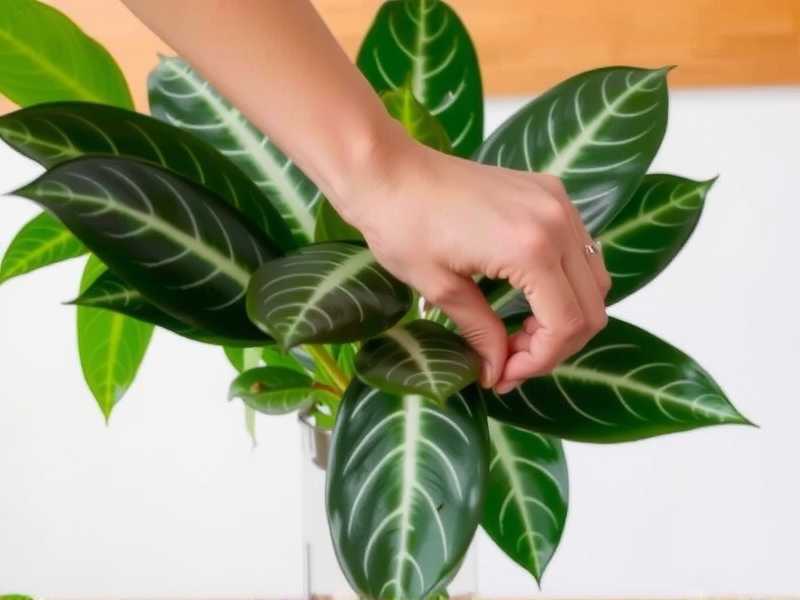
Training is most effective when paired with optimal care. Aglaonemas thrive in bright, indirect light. An east-facing window is ideal. Water only when the top 1-2 inches of soil are dry to prevent root rot, which can undermine all your training efforts. Feed with a balanced, diluted liquid fertilizer monthly during the growing season (spring and summer) to support the energy demands of new, bushier growth. A happy plant is a responsive plant.
Frequently Asked Questions
Can I train a very old, woody Aglaonema stem to bend? Extremely mature, hardened stems are less flexible and can snap if forced. For these, focus on supporting their current direction with a sturdy stake and concentrate your training efforts on encouraging new basal shoots through proper light and feeding. The new growth will be far more pliable and responsive.
How often should I rotate my Aglaonema for even growth? For consistent, balanced growth direction, make quarter-turn rotations a part of your weekly routine. I do it every time I water. For plants in very low light or with a strong single light source, you might rotate slightly more often. Consistency is more important than speed.
Will pruning my Aglaonema make it bushier? Absolutely. Strategic pruning is one of the most effective ways to achieve a bushier Aglaonema. Removing a growing tip redirects a plant hormone called auxin. This redistribution encourages the plant to branch out at nodes below the cut, transforming a single stem into multiple, creating a denser, fuller appearance. Always prune above a node and with clean tools.
The transformation of my Aglaonema over those two weeks was a powerful lesson in proactive plant care. Learning how to train Aglaonema growth direction isn’t a one-time task but an ongoing dialogue with your plant. It combines simple mechanical actions like rotation and staking with an understanding of light and biology through strategic pruning. The result is not just a plant that looks better but a deeper connection to the living process in your home. Start with a quarter turn tomorrow. Observe, adjust, and enjoy the journey of shaping your own lush, balanced Chinese Evergreen.





