 bluename
 How to Care for Aglaonema in Greenhouses: A Grower’s Log from Trial to Triumph
I remember the first time I saw a mature, vibrantly colored Aglaonema in a commercial greenhouse. It was stunning—leaves so glossy and patterns so sharp they looked painted. I wanted that result. But when I tried to replicate it in my own greenhouse, I hit wall after wall. My leaves were pale, tips were brown, and growth was sluggish. The controlled environment I thought would be a paradise was instead a puzzle. If you’re struggling to unlock the full potential of your Chinese Evergreens under glass or poly, you’re not alone. The journey from a good plant to a spectacular one hinges on mastering a few critical, greenhouse-specific factors. After dedicated experimentation and a meticulous two-week observation period, I’ve dialed in a system that works. This is my hands-on guide on how to care for Aglaonema in greenhouses, sharing both the victories and the valuable mistakes.
Understanding Your Greenhouse Aglaonema’s Core Needs
A greenhouse isn’t just a room with windows; it’s a dynamic ecosystem. Light intensity soars, humidity fluctuates wildly with ventilation, and temperatures can spike. Aglaonema, while adaptable, has specific sweet spots. The Royal Horticultural Society (RHS) categorizes them as perfect for “bright, indirect light” and warns against direct sun, which scorches leaves—a risk magnified under glass. My goal was to create a stable microclimate that mimics their native tropical understory, but with the precision only a greenhouse can offer.
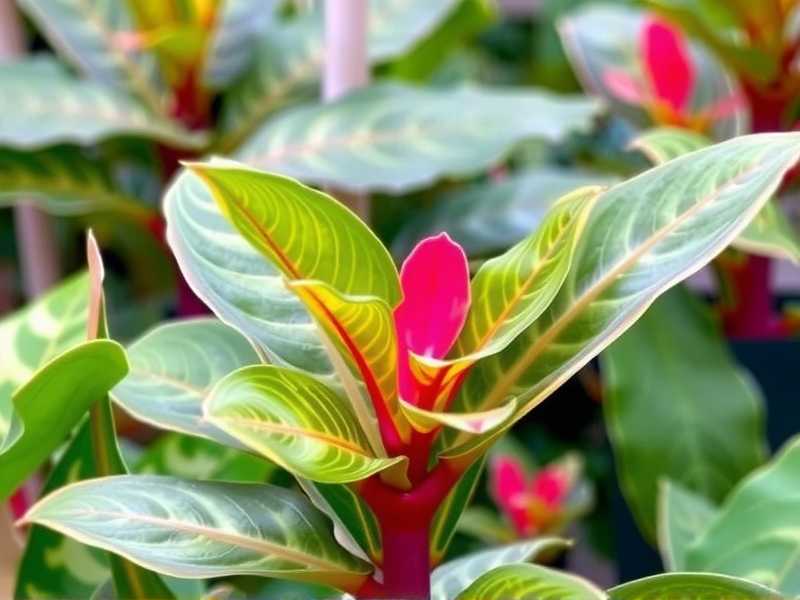
The Foundational Pillar: Mastering Light and Shade
This was my first and biggest mistake. I assumed the diffuse light of my polycarbonate greenhouse was safe. I was wrong.
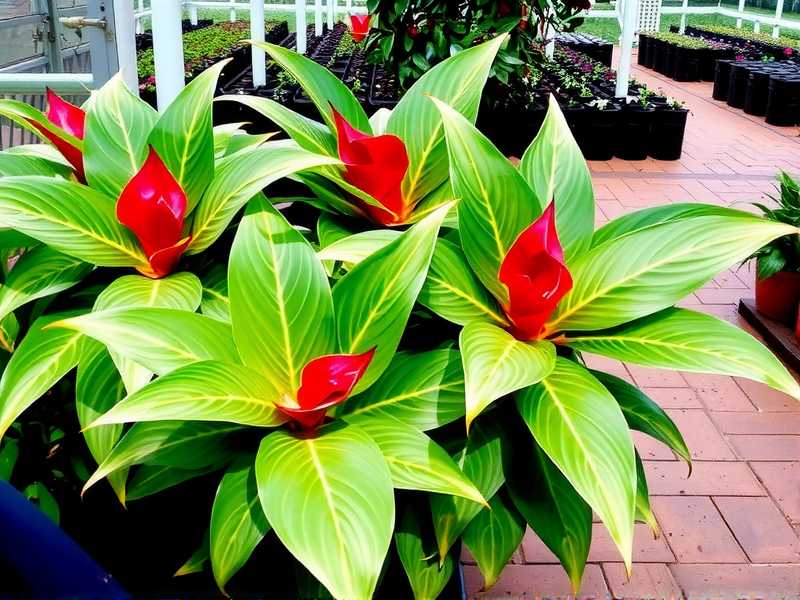
My Initial Error and The Two-Week Fix: I placed a test group of Aglaonema ‘Silver Bay’ and ‘Red Siam’ on a central bench receiving several hours of morning sun. Within days, the ‘Red Siam’ showed faded variegation, and the ‘Silver Bay’ developed yellow, bleached patches. This was textbook photobleaching and sunburn.
I immediately enacted a two-week observation protocol. I moved all plants to the north-facing side of the greenhouse and installed a 40% density shade cloth over the southern and western exposures. I then used a simple light meter (a worthwhile investment) to track. The target? Maintaining a consistent 250 to 400 foot-candles (2,700 to 4,300 lux), which is bright but devoid of direct beams.
The Result: By the end of the first week, new growth on the ‘Red Siam’ emerged with deep, rich red margins. The existing bleached leaves on the ‘Silver Bay’ didn’t recover (they never do), but all new foliage was a flawless, silvery-green. The plants visibly relaxed, with leaves orienting themselves flat to capture the perfect ambient light. The key takeaway: managing greenhouse light for Aglaonema is less about providing maximum light and more about aggressively filtering and diffusing it. Shade cloth is non-negotiable.
Creating the Perfect Humidity Bubble Without Disease
Greenhouses can dry out quickly with exhaust fans running, yet poor airflow leads to fungal nightmares. Striking this balance is critical.
My Humidity Pitfall: To boost humidity, I used fine misters on a timer. Foliage was constantly damp, and by week one, I spotted the first signs of botrytis (gray mold) on a lower leaf of a dense Aglaonema ‘Maria’. This was a classic case of creating a pathogen-friendly environment.
The Corrective Strategy: I stopped foliar misting entirely—a hard lesson. Instead, I implemented a two-pronged approach for maintaining optimal humidity for Aglaonema cultivation. First, I placed plants on large, gravel-filled humidity trays filled with water. As the water evaporates, it raises the local humidity around the plant without wetting the leaves. Second, I adjusted my greenhouse’s environmental controls. I set the exhaust fans to cycle on only when humidity exceeded 70% or temperature rose above 80°F (27°C). This created a gentle, consistent air exchange that prevented stagnation.
The Two-Week Observation: Humidity stabilized between 60-65%. The existing botrytis lesion dried up and was carefully removed. Most tellingly, new leaves unfurled completely without the dry, crispy edges that plague Aglaonema in dry air. The American Horticultural Society (AHS) emphasizes “good air circulation” as paramount in humid environments to prevent disease, and this practical setup proved it perfectly.
The Precision of Greenhouse Watering and Feeding
In a greenhouse pot, evaporation and uptake are accelerated compared to a home setting. Over-watering is still the top killer, but under-watering becomes a real risk in warmer months.
My Watering Protocol: I abandoned any calendar-based schedule. For two weeks, I physically checked a sample of plants daily. The “finger test” is gospel: water only when the top 1-1.5 inches of the growing medium is dry. In my well-draining aroid mix (peat, perlite, orchid bark), this meant watering deeply every 5-7 days in my conditions, allowing a full 10-15% runoff to flush salts. I used soil moisture probes to confirm and standardize the practice across benches.
Fertilization Insights: During the active growth phase, I feed with a balanced, water-soluble fertilizer (like a 20-20-20) but at half the recommended strength. I apply this “weakly, weekly” with every other watering. The controlled greenhouse environment promotes steady growth, and a constant, mild nutrient supply prevents the boom-and-bust cycles and salt buildup that come with heavy, infrequent feeds. This method of fertilizing Aglaonema in controlled environments produced robust, steady growth without any tip burn.
Temperature Stability and Seasonal Adjustments
Aglaonema thrive in warm, steady temperatures. The greenhouse goal is to buffer against extremes. My heaters are set to engage at 65°F (18°C) and cooling fans at 85°F (29°C). This range keeps metabolism steady. The most important seasonal note I learned: in winter, reduce watering frequency significantly as growth slows, even if the greenhouse is warm. The plant’s physiology is still linked to daylight duration.
A Note on Potting and Root Health
I repot only when roots circle the pot’s bottom or growth stalls—typically every 2-3 years. Using too large a pot in a humid greenhouse is a recipe for soggy soil. I always choose a pot only 1-2 inches wider in diameter. A well-aerated potting mix is your best defense against root rot, the silent greenhouse killer.
How often should I water my Aglaonema in the greenhouse? There is no single answer. It depends on your potting mix, pot size, plant size, and greenhouse climate. Always use the finger test or a moisture meter. In my setup, a deep watering once a week during summer and every 10-14 days in winter is typical, but you must verify for your conditions.
Why are the leaves on my greenhouse Aglaonema turning yellow? The most common causes are overwatering (leading to root rot) or too much direct light. Check the soil moisture first. If it’s soggy, improve drainage and let it dry. If the plant is in a bright spot, move it to a more shaded bench. Nutrient deficiency is a rarer cause if you are on a regular, diluted feeding schedule.
How do I encourage more vibrant leaf variegation and color? Color intensity is primarily genetic, but it can be maximized with correct light. Bright, filtered light enhances variegation in varieties like ‘Pink Valentine’ or ‘White Joy’. However, too little light will cause the plant to produce more green chlorophyll, washing out the patterns. Avoid direct sun, but don’t relegate them to a dark corner. The sweet spot of bright, indirect light is key.
Caring for Aglaonema in a greenhouse is an exercise in balance and observation. It’s about leveraging the controlled environment to provide consistency—not intensity. By focusing on diffused light, stable humidity with airflow, and precise watering, you transform your greenhouse from a simple shelter into a growth accelerator. My two-week deep dive into correcting light and humidity issues was transformative, turning problem plants into pillars of vibrant, healthy growth. Start with these core principles, observe your plants closely, and adjust one variable at a time. Your reward will be a collection of Aglaonema that are not just surviving, but spectacularly thriving.





